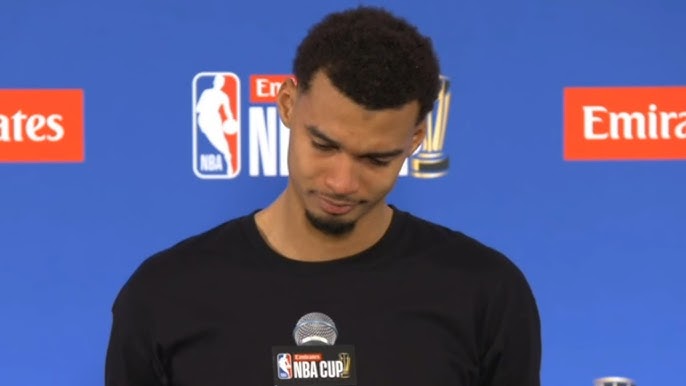
Victor Wembanyama opened his first NBA Finals with the kind of performance San Antonio hoped to avoid, and on ESPN's Get Up the panel landed on an unglamorous explanation: energy.
The Spurs lost Game 1 at home, and Wembanyama — the Western Conference finals MVP who had bulldozed earlier series with statement starts — never found his rhythm. He owned the diagnosis himself.
"I was bad tonight," Wembanyama told reporters. "It's not more complicated than that."
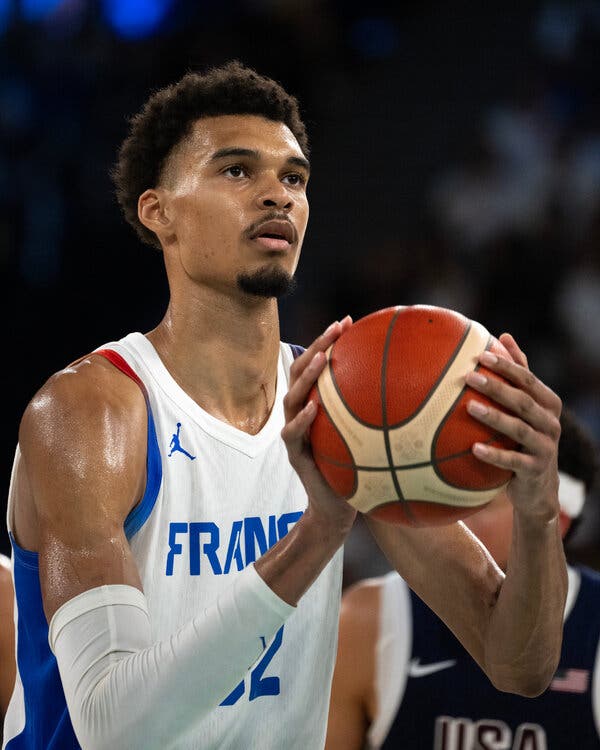
He framed the night as a fixable, self-inflicted setback rather than a sign of a deeper problem. "When I play bad is when we shoot ourselves in the foot," he said. "I'm going to be so much better. I'm going to figure it out."
ESPN insider Brian Windhorst, though, pointed less to execution than to fuel. He thought Wembanyama looked drained from the opening tip of a game that started at a frantic, whistle-free pace.
"First off, I just thought he was a little bit low on energy from the start," Windhorst said. "Wembanyama was already trailing the plays in the first quarter, and I think throughout the game didn't have the energy that we saw to start the last couple of series, when he had dominant Game 1s and wanted to come out and make a statement in the first quarter. I just don't think he had the energy to do it."
The fatigue theory is not far-fetched. San Antonio reached the Finals only after a grueling seven-game Western Conference finals against the Oklahoma City Thunder, a series that asked Wembanyama to defend the rim, initiate the offense and carry a young roster deep into late May.
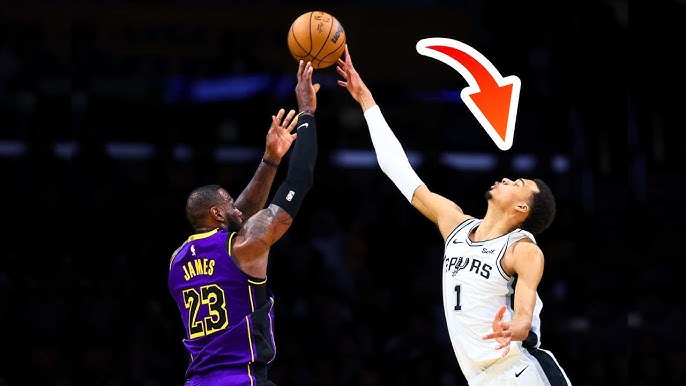
Compounding the problem, the panel argued, was the matchup New York threw at him. The analysts repeatedly returned to Karl-Anthony Towns, whose ability to guard Wembanyama without help let the Knicks stay home on shooters.
"I cannot overstate how important and massive it is that Karl-Anthony Towns could play him straight up," one analyst said. "That means the Knicks could stay out of rotation."
There was, however, an optimistic read folded into the criticism. Wembanyama's struggles came almost entirely on the perimeter, and the panel suggested his offensive game still has another gear waiting on the block.
"All those clips are him playing on the perimeter," one analyst noted. "At some point you've got to put your back to the basket and get a possession down low on the block. You're still watching the development of his game offensively, which is scary — there's still room for improvement."
That was the through-line of the segment: what New York saw in Game 1 was already the best defensive player in the league operating with an offensive game still in its infancy. For the Spurs, a tired, perimeter-bound Wembanyama is a problem with obvious solutions — rest, rhythm and a few more touches where he is most dangerous.
Whether San Antonio can summon that version in time for Game 2 may decide how long this series stays competitive.