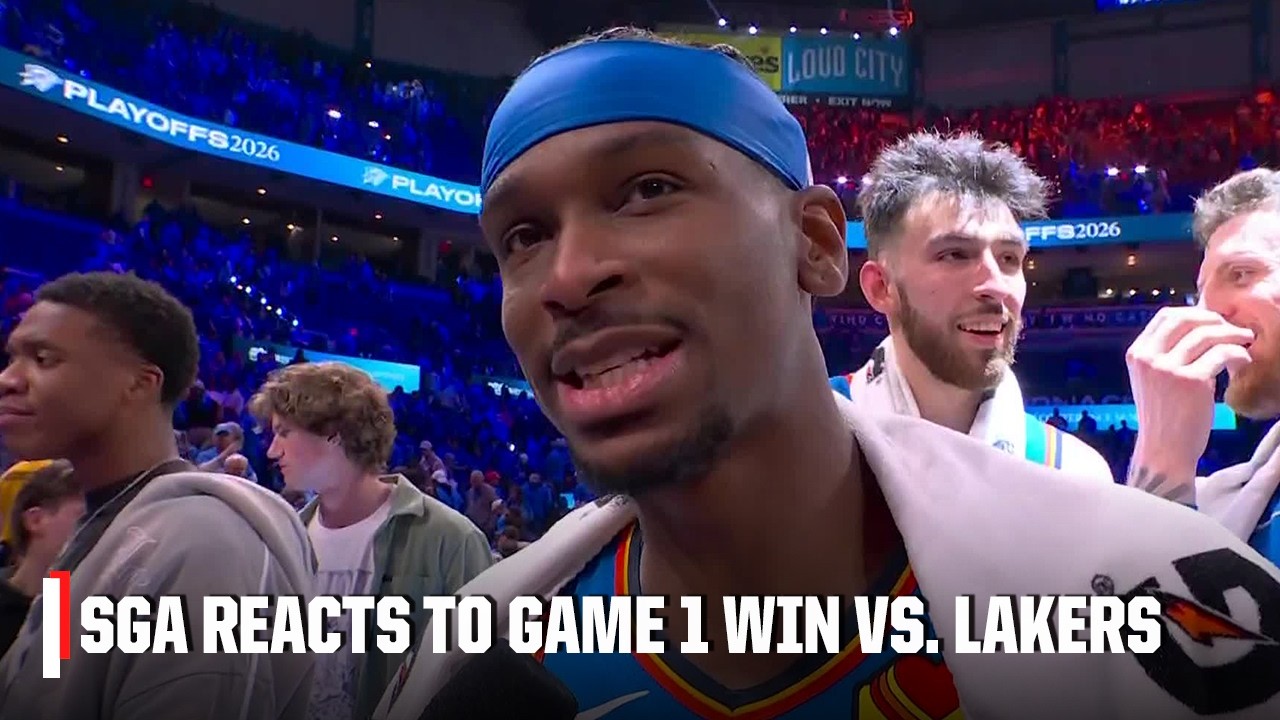
The Oklahoma City Thunder opened their Western Conference Semifinal series against the Los Angeles Lakers on May 5, 2026, with a defensive masterclass that held the Lakers to one of their lowest postseason scoring totals in years. After the win, Shai Gilgeous-Alexander walked through Oklahoma City's blueprint and made it sound deceptively simple.
The defending champions came into the series as heavy favourites, but the first quarter belonged to the Lakers. Sat in the courtside chair after the final buzzer, Gilgeous-Alexander acknowledged the early stretch had not gone to plan.
"LeBron got going early tonight," he told ESPN. "We knew we didn't do a good job of that to come out the gate. We got to clean that up for game two."
That was the small print. The big print was a defensive performance that, once Oklahoma City's rotations clicked into gear, suffocated everything Los Angeles tried to run. Asked what made the Thunder's defence so disruptive, Gilgeous-Alexander didn't bother dressing it up.
"We just try to make people play outside their comfort zone. It's as simple as that. Whatever guys like to do, we like to take away from them."
It is the same philosophy that carried Oklahoma City to the title last season, but the playoff version has been turned up another notch. The Lakers were forced into long possessions, tough switches, and bailout shots late in the clock. Gilgeous-Alexander acknowledged Los Angeles was deliberately throwing extra defenders at him in an attempt to force the ball out of his hands — and he was unbothered.
"They're obviously sending a lot of bodies at me, and those guys stepped into the plays confidently, and that's all you can ask for."
Even with the surrounding cast finishing plays, his offensive rhythm took time to find. Oklahoma City's first-half offence was tentative, an indication that the layoff between rounds had cost them more than a defending champion would normally admit.
"We were a little choppy, a little rusty tonight offensively," Gilgeous-Alexander said. "But we just stuck with it, made plays."
That answer captured the broader Thunder identity. Their margin tonight was not built on early offensive fluency — it was built on grinding past their own slow start, then leaning on the defensive identity that has defined the Mark Daigneault era. The closing minutes of each half were a reminder that, for all the focus on Gilgeous-Alexander's individual dominance, Oklahoma City's most dangerous weapon may still be its collective defensive IQ.
When asked, in a more lighthearted tag to the interview, how much he had to think his way through the Lakers' coverages, Gilgeous-Alexander smiled.
"Tonight was very simple. Multiple bodies, that means multiple people are open, and trust my teammates from there. That's the game."
The reduction of championship-level basketball to that single sentence was not arrogance — it was a player who has clearly internalised what his team does to opponents and what opponents are forced to do back. The Lakers will have to find a way to rebuild some of their game plan before Game 2, particularly around the Thunder's swarming defensive scheme that has been the calling card of this entire postseason.
Game 2 tips off at the same venue. LeBron James will likely come out aggressive again — Gilgeous-Alexander effectively conceded that early-game point — but the Thunder's adjustments are likely to come at the start of quarters, where Los Angeles got the most clean looks. After the headline performance from Chet Holmgren and a quietly efficient Gilgeous-Alexander, Oklahoma City's biggest variable in this series is now whether the defence can hold up another four games against a Lakers offence that has reasons to believe it will be sharper next time out.
For now, the defending champions have their Game 1 lead, and a head-of-the-snake explanation that fits in a single quote.