JJ Redick has spent the season sounding like a coach who has stopped fearing the regular season. After his Los Angeles Lakers were taken apart by the Oklahoma City Thunder in early April, his press conference did the opposite: it sounded like a coach taking inventory of injuries he could no longer afford to wave off.
The headline was Luka Doncic. The Lakers' All-NBA guard left the game holding his left hamstring, and Redick confirmed the obvious next step.
"We'll do an MRI tomorrow, left hamstring," Redick said. "We'll know more tomorrow."
There was no attempt to soften the blow. Doncic had been playing the most efficient stretch of his Lakers career, and a hamstring strain — even a low-grade one — has playoff-altering implications. Redick declined to speculate beyond the imaging.
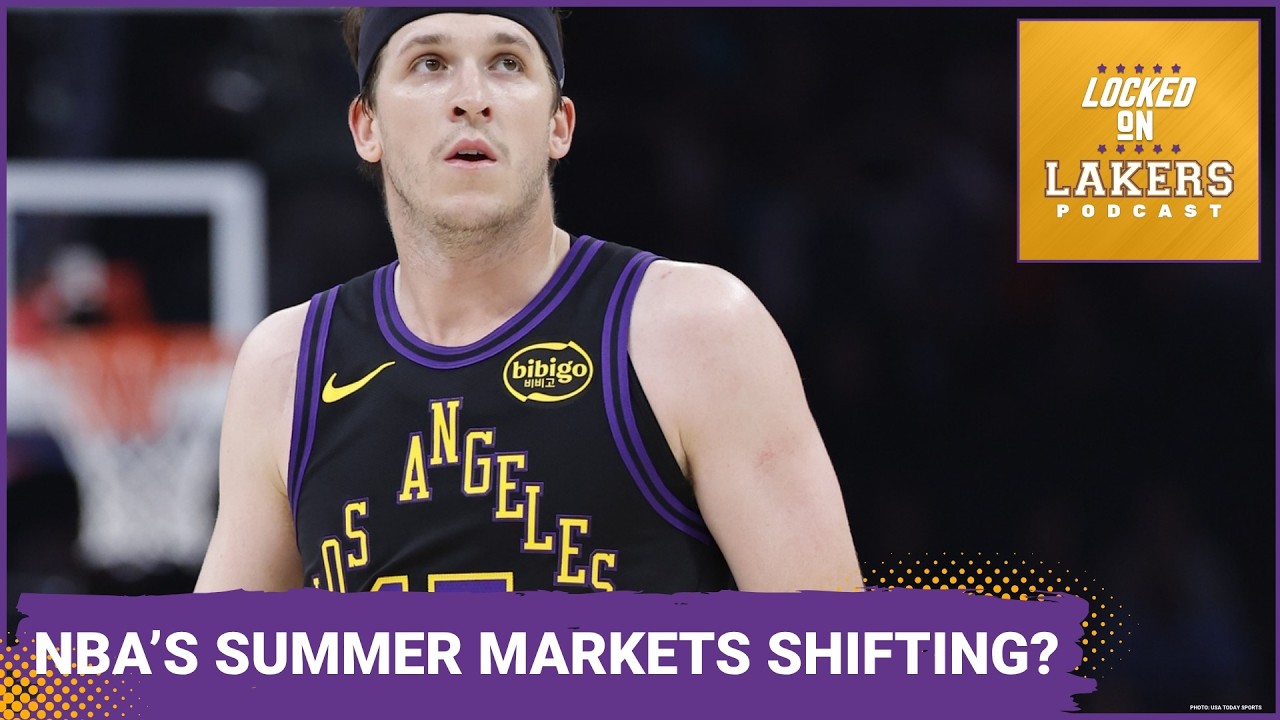
The other half of the medical report belonged to Austin Reaves, who landed awkwardly chasing a loose ball.
"He was in a weird position stretching for a basketball, loose ball," Redick said. "Just felt something — like intercostal — somewhere in his back, you know, in between the ribs. He was able to play through it and battled back, but we'll see how he feels tomorrow."
Reaves was cleared to return after being assessed in the locker room. Redick was firm that the decision was a medical one, not a competitive one.
"We checked him out," he said. "He got work done. He was cleared. I mean, again, we're not going to put a player at risk. Those things happen."
The game itself was effectively over before halftime, but Redick said he and his staff briefly debated giving the starters one more push to climb back into it.
"It was discussed at halftime," he said. "Thought we'd give those guys about six minutes and then we were going to, you know, if we didn't cut into the lead, we were going to pull them."
The Lakers never made the run. Redick said the night turned on the first quarter, where the Thunder built their cushion off Los Angeles' own mistakes rather than off any single hot shooter.
"I don't know that there was an immediate moment," Redick said. "I thought when the game started, we frankly had like unforced turnovers. They just had a lot more shots on goal to start the game. They made — Lou Dort, you know, coming out making threes was big. We settled in offensively in the second quarter, but the eight turnovers in the first quarter really hurt us."
Dort's start was the breakthrough Oklahoma City needed against a Lakers team that had been the league's hottest defense over the previous month. Redick said the Thunder's depth made the night uncomfortable even when Shai Gilgeous-Alexander was not at full speed.
"Shai played 30 minutes and took 25 shots and scored 28 points," Redick said. "Did a good job of not keeping him off the free throw line, but he's going to get his. And those other guys — they made a lot of threes."
With two of his most important offensive players banged up and Oklahoma City emerging as the West's clearest standard, Redick's tone was measured rather than alarmed. The Lakers' first-year head coach has built a season-long habit of treating bad nights as data and treating injuries as logistics. The MRI for Doncic and the imaging questions around Reaves were, in his framing, the next sequence in a process the coaching staff had already begun.
The Lakers were due to face the Thunder again later in the same week, but it was now a matchup defined as much by the medical schedule as by anything tactical. Doncic's hamstring would dictate not just one game but the texture of Los Angeles' final regular-season run-up to the playoffs. Reaves, the team's most reliable two-way connector, was on a similar wait-and-see protocol.
For a Lakers organisation that had spent March chasing a top-six seed, the early-April rout in Oklahoma City was a sharp reminder that the West's defending standard-bearer had not gone anywhere — and that the gap could not be closed without a healthy Doncic.