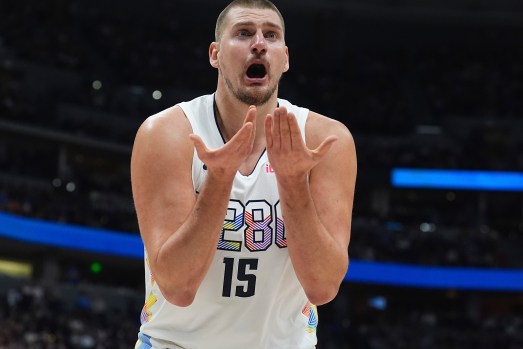
Nikola Jokic is not usually a player anyone catches shouting on an NBA floor. So when Denver's three-time MVP was seen standing over Oklahoma City guard Luguentz Dort in a heated late-March game, demanding he do something, it travelled quickly — and Jokic was asked to explain himself afterwards.
His answer captured the exact tone he has built his career on: calm, measured, and self-critical.
"It is what it is, you know. I'm not going to comment. It's um unnecessary move and unnecessary reaction. There is no such a thing. I think they're not supposed to be um those things in a basketball floor. So, it was just unnecessary move and unnecessary reaction by me," Jokic said.

That double-edged framing — faulting both the opposing player for the trip and himself for reacting — was striking. Jokic refused to publicly assign a larger share of blame to Dort, even as replays showed Jokic going down after what looked like a deliberate leg clip.
In the moment itself, Jokic challenged Dort directly while Dort was still near the play, repeatedly urging him to respond. It is the kind of confrontation Denver teammates have rarely, if ever, seen from Jokic in his career, a stretch marked by almost-unbreakable on-court composure.
For the Thunder, Dort's style of physical, sometimes borderline defense has been part of his calling card for years. Oklahoma City head coach Mark Daigneault has repeatedly praised Dort's competitive edge this season, describing the guard's motor as one of his most underrated skills and pointing to his ability to rattle high-usage offensive stars as a foundation of the Thunder's defensive identity.
For Denver, the incident is less about one play and more about what it signals. Jokic publicly policing an opponent — and then policing himself in the next breath — suggests a Nuggets team aware that the intensity of these matchups is rising into a different gear as the playoffs draw closer.
The Thunder and Nuggets both sit among the top of the Western Conference. A second-round rematch is well within the range of outcomes, and Dort-on-Jokic shifts would be a defining subplot if it happens, particularly given the length of perimeter matchups Oklahoma City can throw at Denver's offensive engine.
Jokic, for his part, was not willing to give the narrative any fuel on his way out of the arena. He apologised to the game itself, not to Dort, and moved on.
"Those things are not supposed to be on a basketball floor," he repeated.
What makes the moment resonate beyond a single possession is the rarity. Over three MVP seasons and a championship run, Jokic has spent almost no time publicly chirping at opponents, officials, or teammates. He has been the league's model of emotional economy on the court. If the intensity of the race to the top of the West is enough to get a rise out of him, it is worth paying attention to what the next six weeks look like.