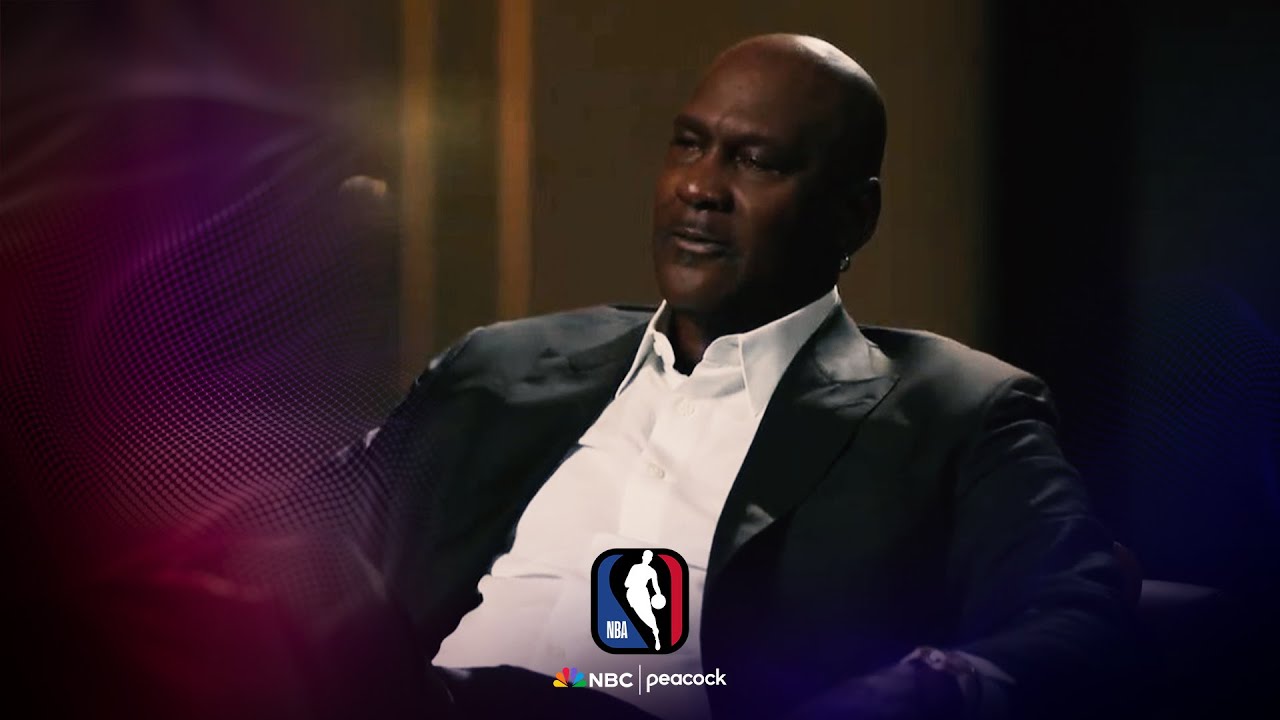
Michael Jordan does not do many on-camera interviews any more. He has not needed to. So when the 62-year-old sat down for NBC's MJ: Insights to Excellence, the small details — the family stories, the throwaway anecdotes, the candid admissions about life in his 60s — landed with the weight of something larger.
What emerged was a portrait of a man whose schedule is no longer dictated by anyone else's expectations. Jordan was direct about why: he is making up for what the chase cost him.
"You never really know when you're in the prime of your career how much time you really do not have for family," Jordan said. "That's what I have time to do now. I mean, the most valuable asset I have is time. So that's probably why you don't see me out [as much]."
It was a striking framing from a man whose ferocity was once defined by his refusal to give time back to anyone. The cost of his prime — what he sacrificed in family hours and friendships to win six titles — has clearly recalibrated his retirement priorities. Jordan's reluctance to do regular media is, by his own account, not aloofness. It's accounting.
The interview's most quoted moment, though, came from a story almost nobody outside Jordan's inner circle had heard. During this year's Ryder Cup, Jordan rented a house near the course. Some of the children of guests at the property asked the basketball legend to take a single free throw. Jordan describes a level of nervousness he claims he had not felt in years.
"So when I stepped up to shoot the free throw, that's the most nervous I've been in years. In years," Jordan said. "And the reason being is, those kids heard the stories from the parents about what I did 30 years ago. So their expectation is 30 years prior, and I have to live up to that."
The vignette gets at one of the strangest things about being Michael Jordan in 2026. His public reputation has not aged. The body has. The expectation has not.
Jordan still loves basketball. He just does not play it anymore. Pressed on whether he ever feels the itch, he was unusually open.
"Still love it," Jordan said. "Love it like you wouldn't believe. I mean, in all honesty, I wish I can take a magic pill, put on shorts, and go out and play the game of basketball today because that's who I am. That type of competition, that type of competitiveness, is what I live for. And I miss it. I miss that aspect of playing the game."
What Jordan does feel an active duty to do, however, is teach. He framed his relationship with the modern game not as one of nostalgic distance, but of obligation — a word he kept returning to.
"It's pay it forward," Jordan said. "You know, I have an obligation to the game of basketball. Not financially — I'm okay. I mean, more or less from as a basketball player, it's to be able to pass on messages of success and dedication to the game."
That is the line that may explain the rumours of Jordan inching closer to a media role — a story that has dogged him for the past 18 months. He has not yet said yes to anything formal, but the language he is using around basketball has shifted from the past tense to something far closer to mentorship. He sounded like a man who has decided the next phase of his life is about handing the game to its next custodians.
If those kids by the rental house in Bethpage felt nervous about the legend showing up to shoot a free throw, they were not alone. Jordan was as nervous as they were — and that, more than anything else, may be the most human thing the GOAT has ever said on camera.