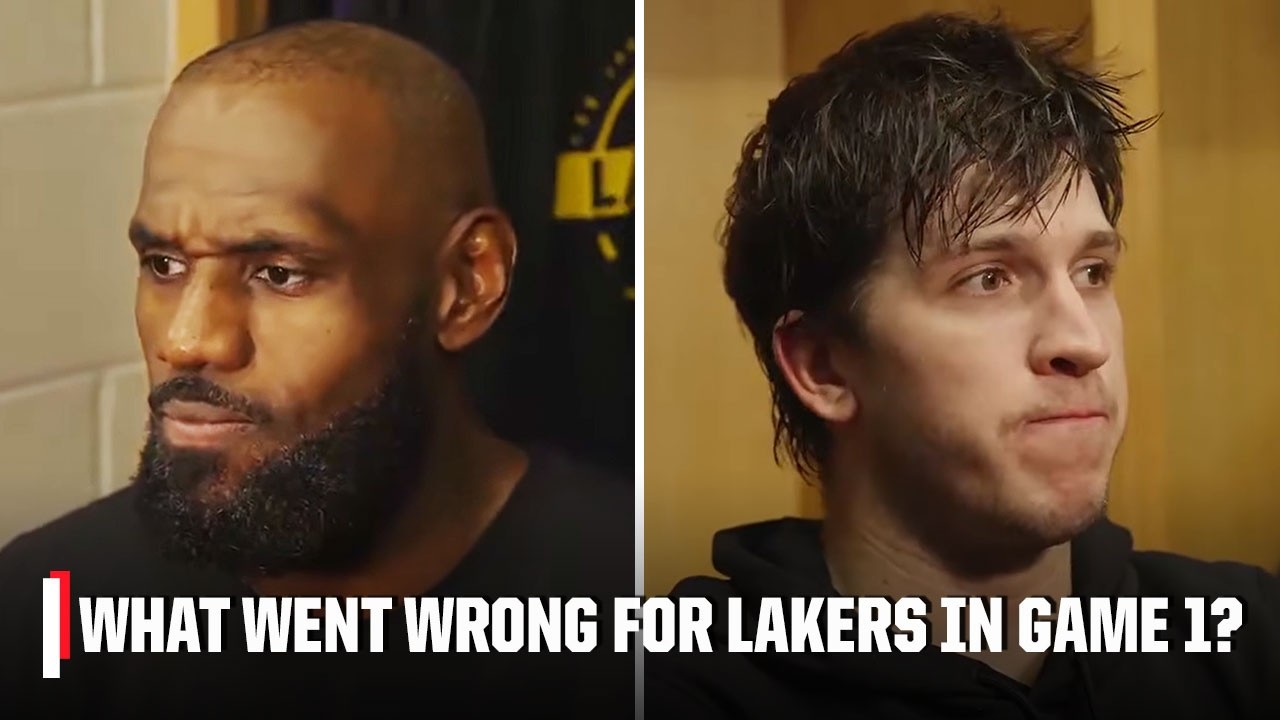
LeBron James has played in 49 playoff series in his NBA career. Asked by ESPN how the Los Angeles Lakers would close the gap between what they need to do and what they were able to do in Tuesday's Game 1 loss to the Oklahoma City Thunder, the 41-year-old's answer carried the weight of someone who had already mentally turned the page to the film session.
"I just thought we had some game plan breakdowns on what we've been preparing for, and we had some breakdowns," James said. "And they're going to test you obviously. They going to see how many times they can make you have game plan breakdowns or game plan discipline."
The pattern has been familiar for opponents of the defending champions throughout the postseason. The Thunder do not need their offence to carry the night — they need a single five-minute window in which the opponent stops being precise. That window arrived in the second half of Game 1 in Oklahoma City. James said the Lakers had recognised the warning signs in the moment, but were unable to stop the run.
"They can go on a run where it's like, okay, we got it right here, two-possession game, three-possession game — and then boom, it's a double-digit lead. And that's what some of the great teams do. So just can't have compound mistakes over those things."
The phrase "compound mistakes" was the hinge of his analysis. James was not pointing at any single player or any single broken coverage. The Thunder's pressure layer is designed to turn one missed rotation into two missed rotations, and a forced bad shot at the rim into a transition catch-and-shoot for the same possession's secondary action. By the time the breakdowns have stacked, the lead has gone from one point to nine.
Whether the film itself helps next, James was less certain. He has been here long enough to know that opponents adjust as much as he does.
"We have enough knowledge — we already been in the postseason now five-plus games. Tonight was our seventh-game postseason. So we have the knowledge, but we will see it on film and see ways we could be better. And obviously they're going to make adjustments too because that's what championship teams do. So we have to be ready for what they bring to the table as well."
Sitting next to him on the dais, Austin Reaves — returning from a month-long absence and clearly searching for rhythm in his first true playoff workload — refused the question of whether the layoff was the cause of his off night.
"I mean, nobody cares about that," Reaves said, when asked whether finding a feel takes one game, two games, three games. "I got to go out there and play better."
Reaves was asked how he planned to reset emotionally after a performance that fell short of his own bar. The answer was clinical.
"Watch film, see what the game gives you, and then like I said, learn from that, and move on. It's not going to do us any good thinking about that."
That mix of accountability and refusal to lean on excuses was, in its own way, the defining thread of the Lakers' postgame. Neither star reached for the obvious narratives — Oklahoma City's incredible depth, the home crowd, Reaves' rust. James returned repeatedly to discipline. Reaves returned repeatedly to having to be better. Both made clear they had no interest in framing the loss as anything other than a list of self-inflicted wounds the Thunder accelerated.
Game 2 will tell the story of whether that resolve translates into cleaner basketball. As LeBron put it, the Thunder will keep probing every gap until something opens. The question is how few times the Lakers let it.