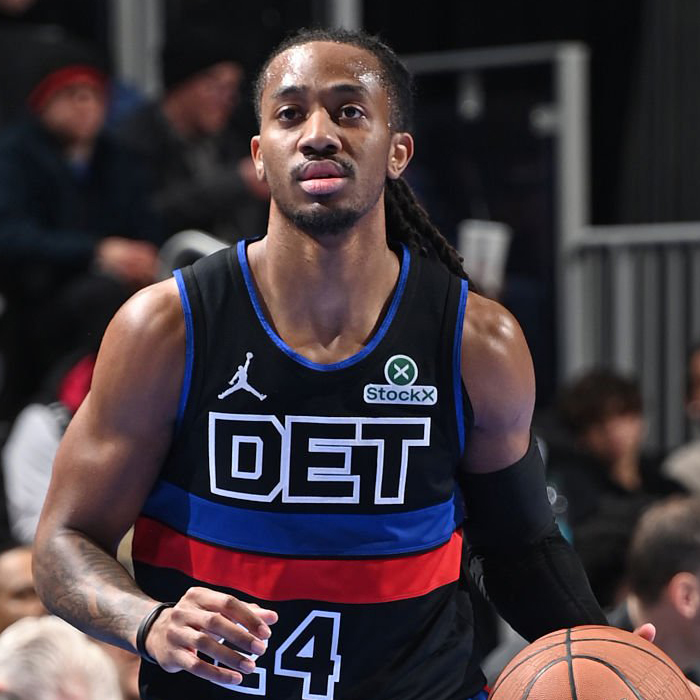
Standing tall at 6'4" and weighing 165 pounds, Daniss Jenkins represents a new breed of point guard that the Detroit Pistons are banking on as they continue their ambitious rebuild. The Dallas native, who dons jersey number 24 for the Motor City franchise, embodies the modern NBA's shift toward bigger, more versatile floor generals who can impact the game in multiple ways.
Jenkins' physical profile immediately sets him apart in the point guard landscape. His 6'4" frame places him among the taller players at his position, providing natural advantages in court vision, passing lanes, and defensive versatility that smaller guards often struggle to match. While his 165-pound frame suggests room for physical development, it also speaks to the athletic fluidity that has become increasingly valuable in today's pace-and-space NBA environment.
The journey from Dallas to Detroit represents more than just a geographical shift for Jenkins – it symbolizes an opportunity to establish himself as a cornerstone piece in one of the league's most intriguing rebuilding projects. The Pistons, under their current management, have shown a commitment to developing young talent and building sustainable success through the draft and player development, making Detroit an ideal landing spot for a promising guard looking to make his mark.


Jenkins' role within the Pistons' system appears multifaceted, leveraging his size advantage to create mismatches while orchestrating the team's offensive flow. His height allows him to see over defensive schemes that might trouble more traditionally-sized point guards, potentially leading to better decision-making and more creative passing opportunities. This physical advantage becomes particularly pronounced in pick-and-roll situations, where his elevated vantage point can help identify defensive rotations and exploit weaknesses in opposing schemes.
Impact and Legacy
Defensively, Jenkins' measurements suggest versatility that could prove invaluable in the Pistons' system. At 6'4", he possesses the length to contest shots from opposing guards while potentially switching onto smaller forwards when defensive schemes require it. His relatively lean build indicates the athletic mobility needed to stay in front of quicker opponents, though continued physical development will likely be crucial for his long-term defensive impact.

**Related:** [Dafydd Jenkins: The Welsh Giant Anchoring Exeter's Second Row Ambitions](/article/dafydd-jenkins-the-welsh-giant-anchoring-exeters-second-row-ambitions-f4f974)
The choice of jersey number 24 carries its own significance, connecting Jenkins to a lineage of great guards who have worn the number throughout NBA history. While comparisons are premature, the selection suggests a player confident in his abilities and comfortable with the expectations that come with wearing a number associated with excellence.
For the Pistons organization, Jenkins represents the type of calculated investment that has become central to their rebuilding philosophy. Rather than rushing to acquire established veterans, Detroit has shown patience in developing younger players who fit their long-term vision. Jenkins' profile aligns perfectly with this approach – a player with clear physical tools and the potential to grow alongside the franchise's other young assets.


The undisclosed nature of Jenkins' contract terms reflects common practice for developing players, but also suggests the organization's flexibility in structuring deals that benefit both player development and salary cap management. This approach allows the Pistons to invest in Jenkins' growth while maintaining the financial flexibility needed to make strategic moves as their rebuild progresses.
Jenkins' development timeline will likely be closely watched by fans and analysts alike, as his success could provide valuable insights into the effectiveness of Detroit's player development program. The Pistons have invested significantly in coaching staff and training facilities designed to maximize young talent, making Jenkins an important test case for these organizational improvements.
By the Numbers
The modern NBA increasingly rewards point guards who can impact winning beyond traditional statistical categories, and Jenkins' physical profile suggests he could excel in these areas. His height advantage could translate to improved rebounding from the guard position, while his court vision benefits could manifest in ways that don't always appear in assist totals – such as drawing defensive attention that creates opportunities for teammates.
As the season progresses, Jenkins' adaptation to NBA-level competition will be crucial for both his individual development and the Pistons' broader timeline. His ability to leverage his physical advantages while continuing to develop his basketball IQ and leadership skills will largely determine his ceiling as a professional player.
Looking Ahead
The Detroit faithful have shown remarkable patience during the organization's rebuilding process, and players like Jenkins represent hope for the franchise's future. His combination of size, position, and development potential embodies the type of calculated gamble that can accelerate a rebuild when it pays off.
For Jenkins personally, the opportunity to establish himself as a key contributor on a young, developing team provides the perfect environment for growth. Rather than competing for limited minutes on a veteran-laden roster, he can focus on expanding his game while contributing meaningfully to the Pistons' long-term success.
The coming months will be telling for both Jenkins and Detroit, as they work together to transform potential into production and continue building toward sustainable NBA competitiveness.