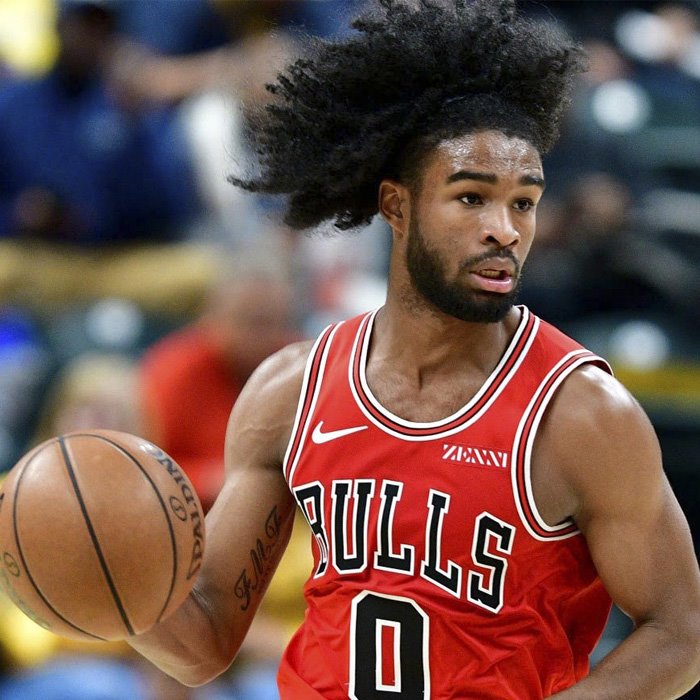
Coby White's journey back to his home state has proven to be a masterstroke for both player and franchise. The 6-foot-5 point guard, now wearing number 3 for the Charlotte Hornets, represents a homecoming story that extends beyond simple geography—it's about finding the right fit at the right time in his NBA career.
Born and raised in Goldsboro, North Carolina, White's path to Charlotte wasn't direct. After starring at the University of North Carolina and spending his early professional years with the Chicago Bulls, the 195-pound guard has settled into a role that maximizes his unique skill set while serving as a crucial piece of the Hornets' backcourt puzzle.
White's physical profile immediately sets him apart in today's NBA landscape. At 6-foot-5, he possesses the size to see over smaller defenders and create mismatches against traditional point guards. This height advantage, combined with his 195-pound frame, allows him to absorb contact on drives to the basket while maintaining enough agility to navigate tight spaces in the lane. His combination of size and skill represents the modern NBA's evolution toward positionless basketball, where traditional guard roles continue to blur.


The financial commitment Charlotte has made to White, reflected in his $12 million annual salary, underscores the organization's belief in his ability to be a cornerstone piece. This investment places him firmly in the conversation as one of the team's key contributors, carrying expectations that extend beyond simple production to leadership and consistency.
White's role with the Hornets has evolved into that of a primary facilitator who can seamlessly transition between playmaking and scoring responsibilities. His court vision and basketball IQ allow him to orchestrate the offense while his shooting ability keeps defenses honest. The North Carolina native has shown particular strength in transition situations, where his combination of speed and decision-making creates advantages for Charlotte's offense.
**Related:** [APX Lending Expands US Operations with New White Label Service](/article/apx-lending-expands-us-operations-with-new-white-label-service)
One of White's most valuable assets is his versatility in the backcourt. Standing at 6-foot-5, he can effectively guard multiple positions on defense while his offensive skill set allows Charlotte's coaching staff to deploy him in various roles depending on matchups and game situations. This flexibility has proven invaluable in today's NBA, where teams increasingly value players who can adapt to different schemes and responsibilities.
The point guard's shooting mechanics and range have been particularly noteworthy aspects of his game. White possesses the ability to stretch defenses with his three-point shooting while also demonstrating touch on mid-range jumpers. This shooting versatility forces opposing defenses to respect his ability to score from multiple levels, creating driving lanes and opportunities for teammates.

Defensively, White's length and basketball instincts allow him to disrupt passing lanes and contest shots effectively. While not considered an elite defender, his effort and team concepts have shown steady improvement, contributing to Charlotte's overall defensive schemes. His ability to switch on screens and guard multiple positions adds another dimension to his value proposition.

The homecoming aspect of White's tenure in Charlotte cannot be understated. Playing professionally in his home state brings a level of comfort and motivation that often translates to improved performance. The familiarity with the region, combined with natural fan support, creates an environment where White can focus entirely on basketball without the distractions that sometimes accompany playing in unfamiliar markets.
White's development trajectory suggests a player who has found his ideal role within the NBA ecosystem. Rather than being forced into an ill-fitting position, his time with Charlotte has allowed him to showcase his natural abilities while addressing areas of growth. This alignment between player capabilities and team needs often produces the most successful professional relationships.
Looking Ahead
The financial security provided by his current contract allows White to play with confidence and aggression, knowing that the organization has invested in his long-term success. This stability often correlates with improved performance, as players can focus on basketball fundamentals rather than contract concerns or future uncertainty.
Looking Ahead
Looking ahead, White's role with Charlotte appears positioned for continued growth. His combination of size, skill, and basketball intelligence provides the foundation for sustained success in the league. The point guard's ability to impact games through multiple facets—scoring, playmaking, and leadership—makes him a valuable asset for a Hornets team building toward competitive relevance.
Career Journey
White's story represents more than individual success; it exemplifies how proper player-team fit can unlock potential that might otherwise remain dormant. His journey from North Carolina native to NBA professional back to representing his home state creates a narrative that resonates beyond statistics and contracts.
As Charlotte continues building its roster and establishing its identity, White's presence provides stability and experience that young teams often lack. His professional approach and understanding of NBA requirements serve as valuable examples for developing players while his on-court production contributes directly to team success.